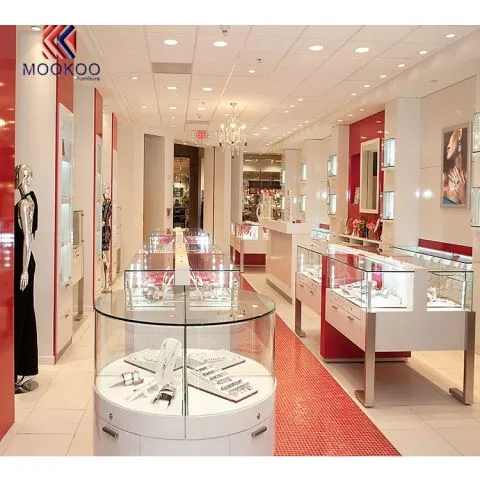
Bold Color-Accented Display Cases Merge Industrial Edge With Retail Functionality For Shanghai’s Indie Accessory Boutiques
Dec 03, 2025

On a humid Saturday in Shanghai's Xintiandi, Lin- a fashion designer from Hangzhou, in town for a textile fair-ducks into Hue & Hardware to escape the rain. She's walked past the boutique a dozen times, but today, something stops her: a matte black-framed glass case, perched atop drawers in a rich forest green, holding a hand-carved ceramic necklace. The green hue mirrors the earthy glazes of the necklace; the dark frame makes the piece's delicate etchings pop. Forty minutes later, she leaves with the $300 necklace, telling staff, "I never noticed these ceramic pieces before-this case makes them feel like something worth stopping for."
For Hue & Hardware's owner, Xiao Yu, this moment is the payoff of a three-month redesign. For years, the boutique relied on plain, neutral-framed counters: functional, but invisible. Its core offering-accessories from indie Chinese designers, including hand-thrown ceramic jewelry and hand-stitched leather goods-blended into the background. "Our designers spend 15 hours carving a single necklace," Xiao says. "The old counters turned that work into just another item on a shelf."
The solution came from Studio Edge, a local Shanghai design team that specializes in small-batch retail fixtures. They paired a matte black metal frame (for industrial, urban edge) with forest-green soft-close drawers: the green hue was chosen to match the earthy glazes of the boutique's star ceramic designer, while the drawers added much-needed storage (cutting staff's time fumbling for inventory by 35%). A sleek glass-dome display (added for high-value pieces) completed the setup, balancing visibility with protection.
The impact was immediate. In four weeks, 70% of shoppers now linger to examine the ceramic line (up from 30% before), and sales of those pieces rose 28%. Staff note a shift in how customers engage: "A university student came in last week," says sales associate Mei, "and spent 20 minutes asking about the ceramic glazing process-she left with a pair of earrings, but she'll be back for the necklace."
Retail design consultant Li Wei frames the cases as a model for indie brands: "Small boutiques can't compete with luxury chains on opulence, so they need to compete on personality. These cases are functional (the drawers) and distinctive (the green hue)-they tell shoppers this boutique cares about both the pieces and the experience."
This autumn, Hue & Hardware will roll out the design to its Guangzhou branch, swapping the forest green for a warm terracotta to align with the city's textile-focused local designer scene. For Xiao, the redesign isn't just about displays-it's about honoring the indie creators she works with. "Our designers don't make mass-produced goods," she says. "Their work deserves a display that's just as unique as they are."